SEEME
Build social confidence through non-visual feedback
An educational app that helps blind users build social confidence through non-visual feedback and community.
一款通过非视觉反馈与社区互动,帮助视障用户建立社交信心的教育应用。
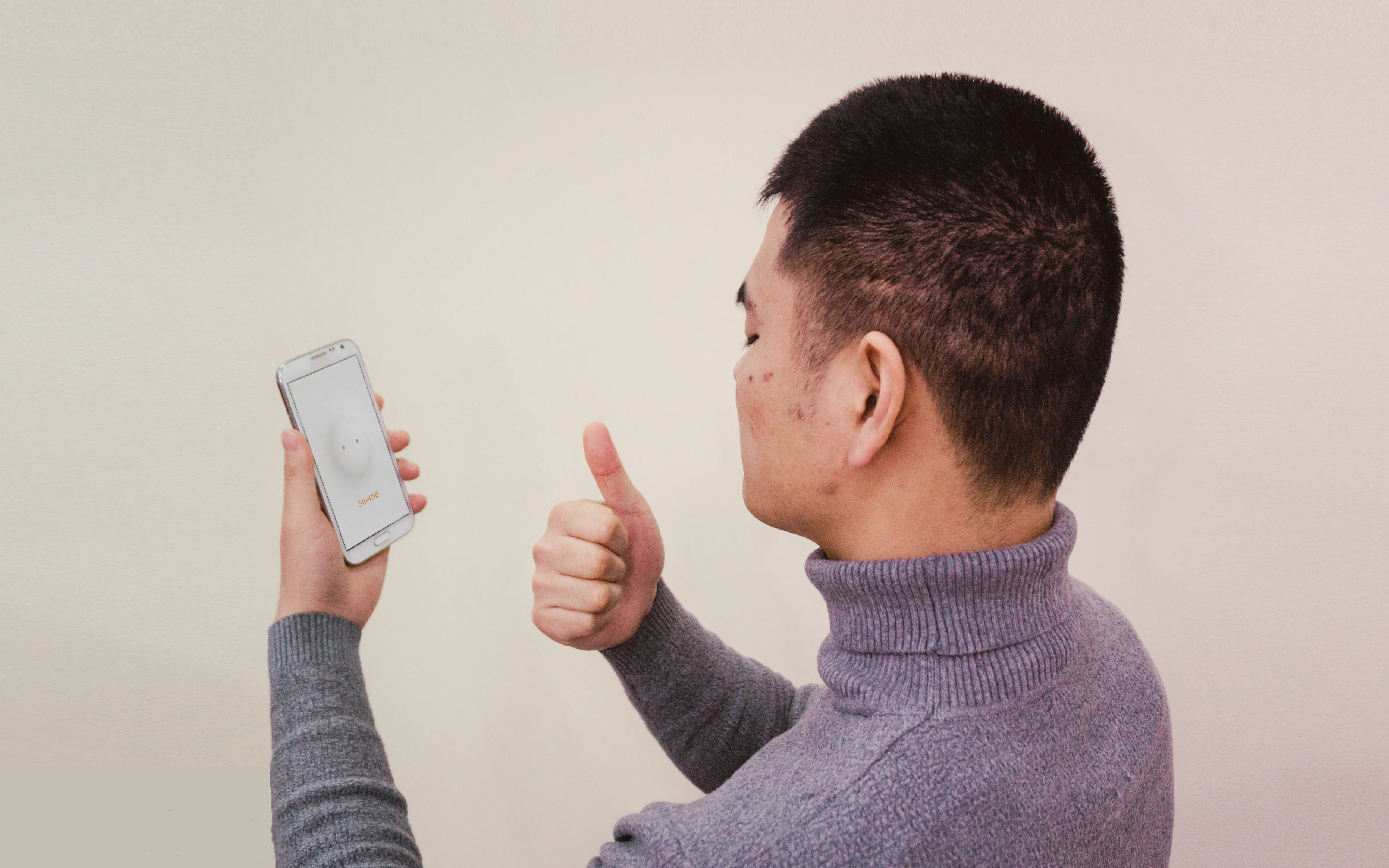
SEEME is an educational mobile app designed to help blind users build confidence in social interactions through non-visual feedback.
In China, blind students often lack access to guidance on non-verbal social skills — gestures, facial expressions, and body language that sighted people learn through visual observation. Without this reference, they may feel uncertain in conversations with sighted people, leading to a loss of social confidence.
My key insight was that the solution should not be prescriptive — telling users what to do or not to do. Instead, SEEME provides soft, non-visual feedback that lets blind users sense and understand their own social behaviors, referencing how sighted people naturally self-correct through visual cues.
Beyond individual practice, SEEME builds a community space where blind and sighted users can interact, exchange feedback, and practice together — promoting inclusion rather than isolated training. A side feature lets users scan their smile to generate a sound emoji, creating a shared language of expression across visual boundaries.
This was my first design project purely focused on user interaction — shaped by shadowing, blindfolded tests, and observation research with real users.
SEEME是一款教育类移动应用,旨在通过非视觉反馈帮助视障用户建立社交信心。
在中国,盲人学生往往缺乏对非语言社交技能的指导——手势、面部表情、肢体语言,这些明眼人通过视觉观察自然习得的能力。没有这种参照,他们在与明眼人交流时容易感到不确定,进而丧失社交信心。
我的核心发现是:解决方案不应该是硬性的指导——告诉用户应该怎么做、不应该怎么做。SEEME提供的是软性的、非视觉的反馈,让盲人用户自己感知和理解自身的社交行为,参考明眼人通过视觉线索自我纠正的机制。
除了个人练习,SEEME还构建了一个社区空间,让视障用户与明眼人互动、交换反馈、共同练习——促进融合,而非孤立的训练。附加功能允许用户扫描微笑生成声音表情包,在视觉边界之外创造共享的情感表达方式。
这是我第一个纯粹聚焦于用户交互的设计项目——通过跟踪观察、蒙眼测试和真实用户的观察研究来驱动设计。
Introduction ↓